Mathematics

Department of Mathematics

FACULTY OF PHYSICAL SCIENCE AND EARTH SCIENCE Department of Mathematics Established in 1962, the Department of Mathematics has been dedicated to nurturing analytical excellence, offering a strong undergraduate programme that prepares students for advanced studies and diverse professional careers. Overview Chowgule College has been nurturing and producing mathematicians since 1962. The Department of Mathematics flourished under the visionary leadership of Prof. D. B. Wagh, a distinguished mathematical scholar and the first Principal of the college. The department currently offers a B.Sc. programme in Mathematics and is committed to delivering a student-oriented undergraduate curriculum.The programme is carefully designed to equip students with strong conceptual foundations, analytical skills, and practical competence, enabling them to pursue diverse career paths in mathematics and related disciplines. Graduates of the department are well prepared for higher studies in pure and applied mathematics, data analysis, business administration, and allied fields.The department consistently attracts students of high calibre, many of whom have secured eminent positions in academia, industry, and professional sectors. Our students regularly demonstrate academic excellence and achieve commendable results in university examinations, reflecting the department’s sustained commitment to quality education and academic rigor. Vision To develop mathematically competent graduates with strong conceptual understanding, analytical skills, and academic preparedness for higher education, research, and professional careers. Mission To prepare students for postgraduate studies in mathematics by offering a comprehensive curriculum through core and elective courses that meet the requirements of universities nationwide.To strengthen foundational mathematical concepts essential for school and higher secondary teaching, supported by elective courses in mathematical education. To encourage research aptitude by offering courses that provide deeper insight into mathematical theory and promote independent inquiry. To offer application-oriented electives that support career pathways in management studies, data analysis, and computer-related fields.To emphasize rigorous problem-solving through chalk-and-board teaching, regular assignments, and extensive textbook-based learning to build mathematical discipline and clarity. Programmes Offered Bachelor of Science (B.Sc) in Mathematics UNDERGRADUATE PROGRAM | 3 YEARS Bachelor of Science (B.Sc) in Mathematics The Undergraduate Programme… Read More No posts found Department Faculty The faculty of the Mathematics Department brings together academic expertise, teaching excellence, and research orientation. The team is dedicated to mentoring students, promoting mathematical inquiry, and delivering conceptual clarity through innovative instructional practices. Monteiro Danielle Clare Savia Assistant Professor Chetali Damodar Naik Assistant Professor No posts found Activities Organised The department organizes a range of academic and student-development initiatives including invited lectures, student seminars, competitions, and outreach programmes to enhance mathematical learning beyond the classroom. No posts found Teaching & Learning methods The Department of Mathematics adopts a blended and student-centric approach to teaching and learning, aimed at enhancing conceptual understanding and analytical skills. The methods employed include: Lecture Method for systematic introduction of mathematical concepts and theories Discussion Method to encourage critical thinking and active classroom participation Flipped Classroom approach to promote self-learning and deeper in-class engagement Problem-Solving Method through regular practice, assignments, and guided exercises Student Presentations to develop communication skills and mathematical reasoning Real-Life Applications to connect mathematical theory with practical scenarios Software Training using mathematical and computational tools to enhance applied learning These methods collectively foster independent learning, problem-solving ability, and academic preparedness. Best Practices The Department of Mathematics follows several best practices to strengthen conceptual understanding, analytical thinking, and independent learning among students. Relating Mathematics to Real Life: Mathematical concepts are consistently linked to real-life situations and practical applications to enhance relevance and student engagement. Activity-Based Learning: Classes include problem-based and activity-oriented tasks that encourage active participation, logical reasoning, and collaborative learning. Mandatory Textbook Reading: Students are required to regularly read standard textbooks and solve assigned problems to develop mathematical maturity and self-discipline. Emphasis on Problem Solving: Regular assignments, in-class problem-solving sessions, and guided practice form a core component of instruction. Student Presentations: Learners are encouraged to present solutions and topics, fostering clarity of thought and confidence in mathematical communication. Use of Technology: Mathematical software and digital tools are integrated to support visualization, computation, and applied learning. Continuous Mentoring: Faculty provide academic guidance and individualized support to help students progress towards higher studies, research, and professional goals. These practices collectively create a rigorous yet supportive learning environment that promotes deep understanding and academic excellence. Alumni Prominent alumni of the department have excelled across industry, entrepreneurship, and academics.
Department of Env. Sci. & Impact Assessment

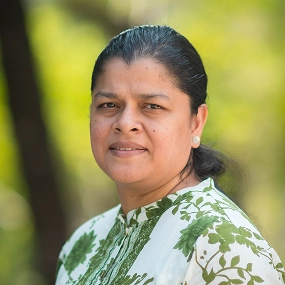
FACULTY OF PHYSICAL SCIENCE & EARTH SCIENCE Department of Environment Science & Impact Assessment Established In 2024-2025 Overview The Department of Environmental Science, Impact Assessment & Sustainability (ESIA) at CES’s Parvatibai Chowgule College of Arts & Science (Autonomous), is a multidisciplinary academic unit committed to addressing contemporary environmental challenges through education, research, and community engagement. The department integrates core environmental science principles with applied impact assessment, sustainability science, and policy-oriented approaches. With a strong emphasis on experiential learning, field exposure, and problem-solving, the department prepares students to respond effectively to regional, national, and global environmental issues while promoting ecological responsibility and climate resilience. Vision To emerge as a centre of excellence in environmental education and sustainability practices, fostering environmentally responsible citizens and professionals capable of addressing complex socio-ecological challenges. Mission To impart high-quality education in environmental science, impact assessment, and sustainability. To promote interdisciplinary learning, research, and innovation aligned with sustainable development goals. To encourage critical thinking, ethical responsibility, and evidence-based decision-making. To engage with communities, industries, and institutions for real-world environmental problem-solving. Programmes Offered The Department of ESIA offers undergraduate programmes designed in alignment with the National Education Policy (NEP) 2020 framework, emphasizing flexibility, skill development, and multidisciplinary learning. It offers: Single majors in ESIA with minor in Biotechnology Double Majors in ESIA and Biotechnology Bachelor of Science (B.Sc) in ESIA UNDERGRADUATE PROGRAM | 3 YEARS Bachelor of Science (B.Sc) in Environmental Science and Impact… Read More No posts found Department Faculty Mr. Aditya R. Redkar Assistant Professor Ms. Pallavi Thimmappa Hegde Assistant Professor No posts found Activities Organised The department regularly organizes workshops, seminars, expert lectures, field visits, environmental awareness campaigns, student-led initiatives, and industry-academia interactions. Wildlife Week Wildlife Trail Synapse 2K25-26 Raia Lake Visit Nobel Lauriet lacture Interdiciplinary quiz competeion Teaching & Learning method The department adopts experiential learning, project-based learning, flipped classroom methods, fieldwork, case studies, digital tools, internships, and community engagement. Best Practices The department integrates fieldwork, SDGs, ethics, innovation, and continuous curriculum enrichment aligned with NEP.

Bachelor of Science (B.Sc) in Mathematics

UNDERGRADUATE PROGRAM | 3 YEARS Bachelor of Science (B.Sc) in Mathematics The Undergraduate Programme in Mathematics is a multidisciplinary, future-oriented programme designed in alignment with the National Education Policy (NEP) 2020, and implemented from the Academic Year 2024–2025. Apply Now View Syllabus Overview The B.Sc. in Mathematics programme is designed to provide students with a strong foundation in both pure and applied mathematics. The curriculum emphasizes conceptual clarity, logical reasoning, and analytical problem-solving skills, preparing students for advanced studies and diverse career opportunities. Through a balanced combination of core courses, electives, and application-based papers, students gain exposure to areas such as algebra, analysis, statistics, and computational methods. The programme also integrates real-life applications, activity-based learning, and software training to enhance practical understanding. Graduates of the programme are well equipped to pursue postgraduate studies, research, teaching, and careers in fields such as data analysis, finance, management, and information technology. Program Specific Outcomes (PSO) PSO-1: Mastery of Core Mathematical Disciplines Graduates will develop a strong foundation in core mathematical areas such as algebra, calculus, real and complex analysis, differential equations, and linear algebra, enabling them to analyze and solve diverse mathematical problems. PSO-2: Logical Reasoning and Abstract Thinking Graduates will cultivate rigorous logical reasoning and abstraction skills, allowing them to construct mathematical proofs, develop theoretical frameworks, and approach problems systematically with mathematical precision. PSO-3: Computational and Analytical Proficiency Graduates will acquire computational skills and the ability to use mathematical software and algorithms to solve numerical problems, analyze data, and model real-world situations mathematically. PSO-4: Application of Mathematical Techniques Graduates will be equipped to apply mathematical theories and problem-solving techniques in various fields expanding their career prospects beyond traditional mathematics. Graduates will develop a strong foundation in core mathematical areas such as algebra, calculus, real and complex analysis, differential equations, and linear algebra, enabling them to analyze and solve diverse mathematical problems. Graduates will cultivate rigorous logical reasoning and abstraction skills, allowing them to construct mathematical proofs, develop theoretical frameworks, and approach problems systematically with mathematical precision. Graduates will acquire computational skills and the ability to use mathematical software and algorithms to solve numerical problems, analyze data, and model real-world situations mathematically. Graduates will be equipped to apply mathematical theories and problem-solving techniques in various fields expanding their career prospects beyond traditional mathematics. Course Structure Internship of 4 credits should be completed in Semester IV and V Sem I Sem II Sem III Sem IV Sem V Sem VI Major Core Minor/ Vocational Multidisciplinary Course (MDC) Value Added Course (VAC) Ability Enhancement Course (AEC) Skill Enhancement Course (SEC) UG-MAT-101: Basic Algebra UG-MAT-102: Basic Calculus UG-MAT-MDC1: Descriptive Statistics UG-MAT-SEC1: Differential Equations I Major Core Minor/ Vocational Multidisciplinary Course (MDC) Value Added Course (VAC) Ability Enhancement Course (AEC) Skill Enhancement Course (SEC) UG-MAT-103: Basic Real Analysis UG-MAT-104: Mathematics for Sciences UG-MAT-MDC2: Mathematics for Competitive Exams UG-MAT-SEC2: Operations Research I Major Core Minor/ Vocational Multidisciplinary Course (MDC) Value Added Course (VAC) Ability Enhancement Course (AEC) Skill Enhancement Course (SEC) UG-MAT-201: Mathematical Analysis I UG-MAT-202: Algebra I UG-MAT-203: Combinatorics UG-MAT-MDC3: Probability and Inferential Statistics UG-MAT-SEC3: Numerical Methods Major Core Minor/ Vocational UG-MAT-204: Mathematical Analysis II UG-MAT-205: Linear Algebra UG-MAT-206: Number Theory I UG-MAT-207: Coordinate Geometry UG-MAT-VOC1: Pedagogy of Mathematics Major Core Minor/ Vocational UG-MAT-301: Calculus of Several Variables UG-MAT-302: Graph Theory UG-MAT-303: Advanced Analysis UG-MAT-VOC2: Probability and Statistics Major Core Minor/ Vocational UG-MAT-305: Vector Analysis UG-MAT-306: Complex Analysis UG-MAT-307: Metric Spaces UG-MAT-308: Differential Equations II UG-MAT-VOC3: Operations Research Techniques Major Core Minor/ Vocational Multidisciplinary Course (MDC) Value Added Course (VAC) Ability Enhancement Course (AEC) Skill Enhancement Course (SEC) UG-MAT-101: Basic Algebra UG-MAT-102: Basic Calculus UG-MAT-MDC1: Descriptive Statistics UG-MAT-SEC1: Differential Equations I Major Core Minor/ Vocational Multidisciplinary Course (MDC) Value Added Course (VAC) Ability Enhancement Course (AEC) Skill Enhancement Course (SEC) UG-MAT-103: Basic Real Analysis UG-MAT-104: Mathematics for Sciences UG-MAT-MDC2: Mathematics for Competitive Exams UG-MAT-SEC2: Operations Research I Major Core Minor/ Vocational Multidisciplinary Course (MDC) Value Added Course (VAC) Ability Enhancement Course (AEC) Skill Enhancement Course (SEC) UG-MAT-201: Mathematical Analysis I UG-MAT-202: Algebra I UG-MAT-203: Combinatorics UG-MAT-MDC3: Probability and Inferential Statistics UG-MAT-SEC3: Numerical Methods Major Core Minor/ Vocational UG-MAT-204: Mathematical Analysis II UG-MAT-205: Linear Algebra UG-MAT-206: Number Theory I UG-MAT-207: Coordinate Geometry UG-MAT-VOC1: Pedagogy of Mathematics Major Core Minor/ Vocational UG-MAT-301: Calculus of Several Variables UG-MAT-302: Graph Theory UG-MAT-303: Advanced Analysis UG-MAT-VOC2: Probability and Statistics Major Core Minor/ Vocational UG-MAT-305: Vector Analysis UG-MAT-306: Complex Analysis UG-MAT-307: Metric Spaces UG-MAT-308: Differential Equations II UG-MAT-VOC3: Operations Research Techniques Faculty of Physical Science & Earth Science Department of Mathematics Established in 1962 Read More Career Opportunities Graduates of the B.Sc. Mathematics programme have diverse academic and professional career options. The strong analytical and problem-solving skills developed during the programme enable students to excel in multiple fields, including: Higher Education and Research: M.Sc. Mathematics, Applied Mathematics, Statistics, Data Science, Operations Research, and interdisciplinary research programmes. Teaching Profession: School and higher secondary teaching after completing B.Ed. or postgraduate qualifications. Data Analytics and Data Science: Roles such as data analyst, business analyst, and quantitative analyst. Banking, Finance, and Insurance: Careers in banking services, actuarial science, financial modelling, and risk analysis. Management Studies: MBA and related programmes in finance, analytics, and operations. Information Technology: Software development, programming, testing, and computational roles. Government and Competitive Examinations: Civil services, banking exams, and other public sector opportunities. The programme equips students with the academic readiness and skill set required for both employment and advanced studies.

Scroll to Top