Campus Life > Academic & Administrative Resources > Research and Development Cell
Research and Development Cell
Overview
The Research Development Cell (RDC) has been established in accordance with the guidelines of the University Grants Commission (UGC) and the Directorate of Higher Education (DHE) to strengthen research activities within the institution. The RDC focuses on streamlining and supporting research initiatives across departments. It assists in planning research work, identifying funding opportunities, developing proposals, and promoting interdisciplinary collaboration. The Cell also emphasizes ethical research practices and facilitates coordination of research activities within the institution.
The RDC encourages students to participate in research and innovation activities in order to gain meaningful research experience. It also supports faculty members by facilitating access to research incentives, guidance, and institutional support for undertaking research and innovation activities. Through its structured functioning and dedicated committees, the RDC seeks to enhance research output and ensure that research outcomes contribute meaningfully to academic growth and societal needs.
Objectives
- To create a supportive research environment that encourages quality research, innovation, and interdisciplinary collaboration among faculty members and students.
- To assist faculty members in planning research activities, identifying funding opportunities, and developing research proposals.
- To facilitate coordination of research activities across departments
- To promote adherence to ethical research practices.
- To encourage the active involvement of students in research and innovation activities, enabling them to gain meaningful hands-on research experience.
- To support faculty members through access to research incentives, guidance, mentoring, and institutional support for undertaking research and innovation activities.
- To promote the generation and dissemination of research-based knowledge that contributes to academic development and addresses societal needs.
Faculty Research & Publications
Research projects are undertaken by faculty funded by various funding bodies. To encourage projects, policy documents on Research funding bodies and research promotion polices are formulated. Workshops are also conducted to encourage research proposal writing. Thus college has strengthened its research infrastructure to create conducive research environment and promote research works on the campus. Research Discussion Forum (RDF) was established in 2016, to encourage interdisciplinary research projects and consultancy activities.
Year Wise Research Projects and Grants Obtained by the Faculty:
Researchers are encouraged to publish their research findings in peer reviewed journals listed by Consortium for Academic and Research Ethics (CARE) of UGC or indexed in Scopus/Web of Science/India Citation Index. College organizes workshops on creating awareness about Predatory journals and for encouraging researchers to publish their research findings in peer reviewed journals listed by Consortium for Academic and Research Ethics (CARE) of UGC
Year Wise Research Publications:
- Research Publications - 2024-25
- Research Publications - 2023-24
- Research Publications - 2022-23
- Research Publications - 2021-22
- Research Publications - 2020-21
- Research Publications - 2019-20
- Research Publications - 2018-19
- Research Publications - 2017-18
- Research Publications - 2016-17
- Research Publications - 2015-16
Many faculty share their knowledge and expertise through the media of books. Our faculty members have authored books which serve as reference books or text books for institutions and professional colleges.
Year Wise Book Publications:
Code of Research Ethics Policy was formulated to govern the standards of conduct of research on the campus, encompassing ways to avoid Plagiarism; Research Publication Ethics and Quality Publications (UGC- CARE list). While carrying out research, it is important to adhere to ethical principles, curb plagiarism and conform to the requirements of adhering to quality of research publications.
UGC Notices and Notifications:
1. UGC notice on Self Plagiarism Visit:https://www.ugc.ac.in/pdfnews/2284767_self-plagiarism001.pdf
2. UGC NOTIFICATION: Promotion Of Academic Integrity And Prevention Of Plagiarism In Higher Educational Institutions Regulations, 2018
Visit: https://www.ugc.ac.in/pdfnews/7771545_academic-integrity-Regulation2018.pdf
3. UGC- Good Academic research practices Visit:https://www.ugc.ac.in/e-book/grap_29092020/mobile/index.html
Well defined research polices govern the research on the campus and are aimed at fulfilling the following objectives.
1) Promoting research amongst teachers and students.
2) Enabling faculty members and students to understand the facilities provided to encourage research on campus.
3) Providing framework for availing support to carry out research.
4) Describing process of rewarding faculty and students for excellence in research.
5) Creating awareness on research related ethical requirements of the college.
6) Ensuring academic integrity and avoiding plagiarism
7) Facilitating consultancy works.
Research Policies:
- Research Promotion Policy Document
- Promoting Research Culture
- Promoting Research excellence
- Availing Seed money/financial aid for Research
- General Policy for drafting of MoU
- Promoting Research Project proposals submissions
- Consultancy policy
- Plagiarism policy
- IPR policy
- Code of Research Ethics
- IEC Policy
- Policy on screening of proposal for Financial Assistance under RDC
Thrust Area of Research
A significant number of faculty members are actively involved in undertaking research projects, publishing and presenting their research findings and carrying out collaborative research activities. The departments actively involved in research are tabulated below:
DEPARTMENTAL THRUST AREAS
| Sr.No. | Department | Thrust areas |
|---|---|---|
|
01 |
Geography |
Population, Socio – Cultural & settlement Studies, Agricultural Geography, Remote Sensing and GIS |
|
02 |
Zoology |
Human Genetics, Genetic toxicology, Epidemiology of human disorders, Avian Studies, Mangrove faunal studies, Teaching-Learning Pedagogies. |
|
03 |
Sociology |
Diaspora and migration studies, women in social context. |
|
04 |
Biotechnology |
Microbiology Enzymology Environmental Biotechnology |
|
05 |
Computer Science |
Data Mining, Data base systems, decision support systems. Computer networking. |
|
06 |
Chemistry |
Material Sciences |
|
07 |
Physics |
Theoretical Nuclear Physics, Experimental Neutron Physics, Theoretical condensed matter Physics, Material Science and computational quantum mechanics. |
|
08 |
English |
American and Goan Literature |
|
09 |
Botany |
Plant Physiology, Plant tissue culture |
Specialised Research labs
As research is the key focus of this institute, management of the college introduced specialized research laboratories such as Geographical information services Lab(GIS), Photogrammetry Lab, Human Genetic Research lab, Plant Physiology lab and Analytical Lab. Besides these, the college harbors well equipped library and a wi-fi campus.
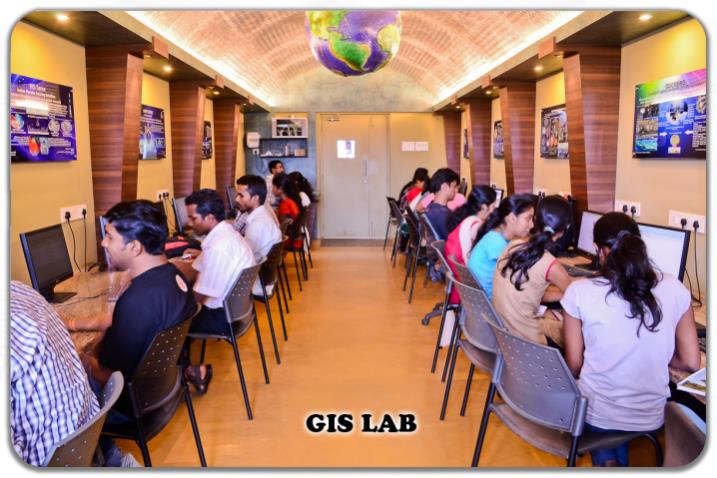
1) Geographical information services Lab(GIS)
GIS Lab has 20 computers with loaded with GIS software ArcView 10, ArcGIS Master Lab kit, software for image processing like ENVI 4.6 and IDL for modeling. In addition all computers have programming facilities like C, C++, Visual Basic 6.0, and graphical facilities like AutoCAD
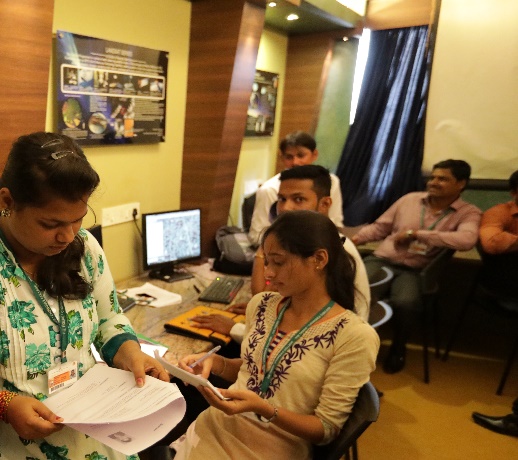
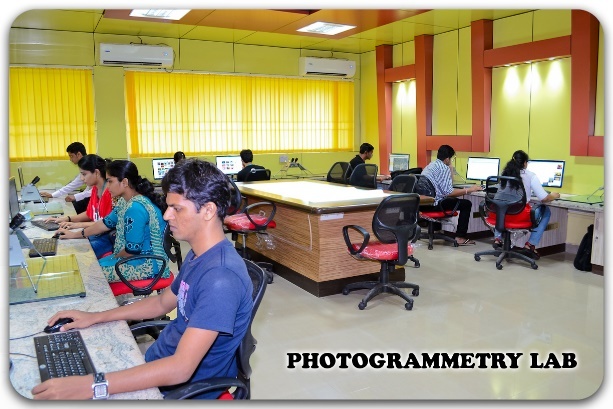
2) Photogrammetry Lab
has the necessary setup along with 20 sets of multispectral satellite data and other field and navigation Instruments such as GPS Garmin Map 76CSx, GPS Oregon 550, GPS Etrex Vista HCx, GPS Montana 650, Brunton Compass and Tangent Clinometer and Survey Instruments such as Prismatic Compass, Transit Theodolite, Chain set, Chain and Tape Survey set, Plain Table survey sets etc. Post-processing and real-time kinematic (radio frequency 438MHz) range upto 25 Km having accuracy of 5mm. consultancy projects are carried out at these labs.
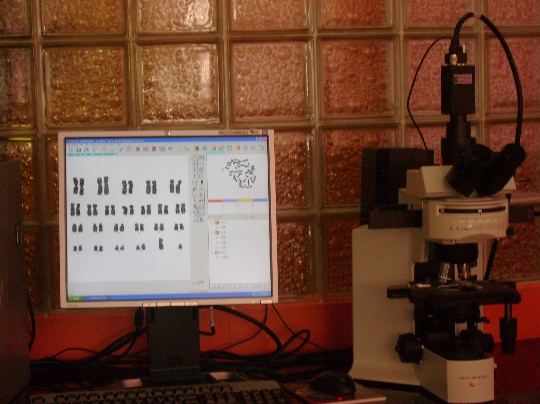
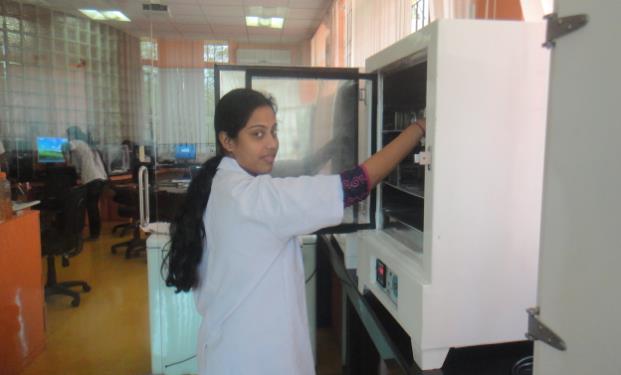
3) Chowgules Human Genetic Research Lab(CHGRL)
The research at CHGRL is focused on genetic disorders in humans, genetic toxicity studies, and epidemiological studies.The lab has offers internships and trainings in the field of Human genetics, digital Karyotyping, Comet assays, culture techniques and cytogenetic techniques. CHGRL also offers Post Graduate Diploma course in Clinical Genetics and Medical Lab techniques (PGDCGMLT).
4) Plant Physiology Research Lab
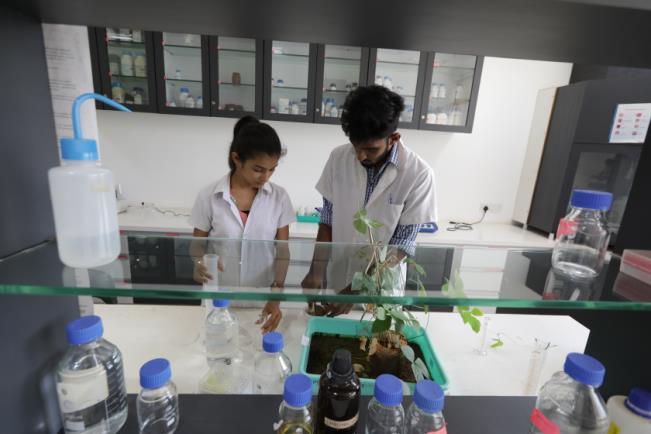
Plant Physiology Research Lab is equipped with all basic facilities in Plant Science Research. Lab also has facility for growing plants under controlled conditions. The equipments available are PCR, rotary vacuum evaporator, UV spectrophotometer and chlorophyll flurometer.
5) Central Research Lab(CRL)
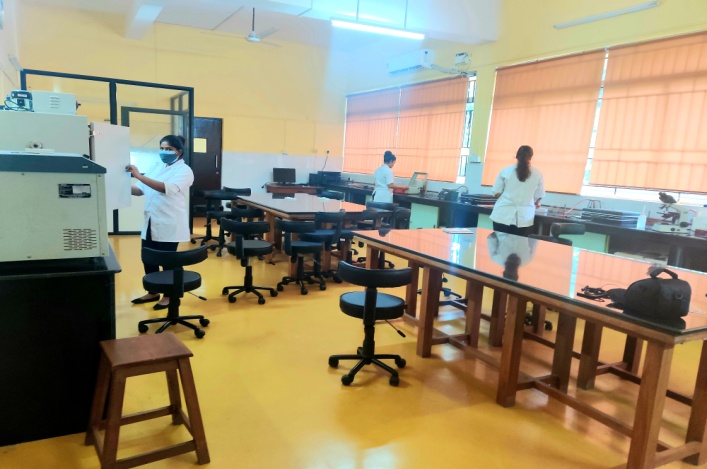
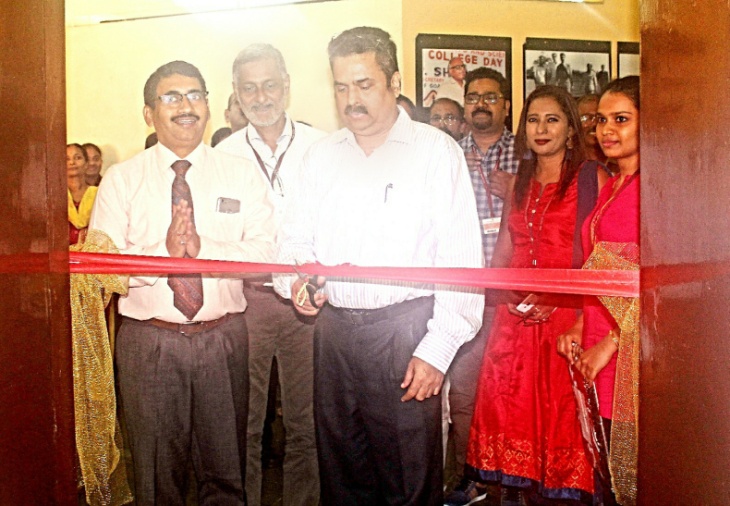
CRL was established in 2018, to strengthen and upgrade available science research facilities to advanced research & training to enable researchers to take up challenging research projects. It harbors high-end research instruments viz Gel Doc, Tissue culture facilities etc. This was funded through RUSA and DBT star college scheme.
6) Analytical Lab
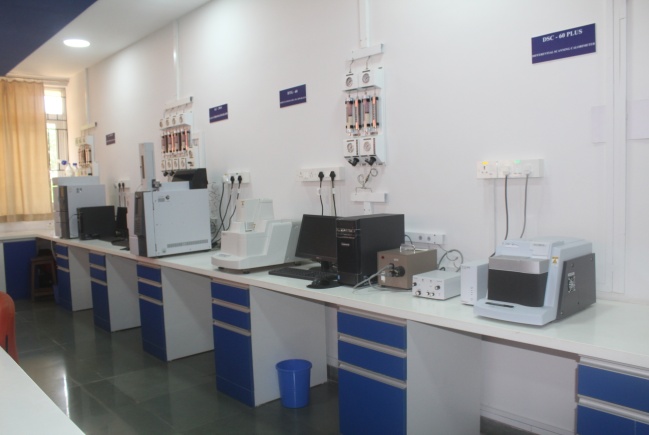
The Instrumentation Laboratory is well equipped with the following sophisticated instruments such as FTIR spectrophotometer, atomic spectrophotometer, TG- DTA analyser, Differential scanning calorimeter and Gas Chromatography.
7) Environmental Research Laboratory
Environmental Research Laboratory has equipments for soil and water testing. The laboratory maintains sufficient analytical and support instruments/ equipment for conducting analytical operations since modern analytical laboratory depends heavily upon instrumentation.
8) Plant tissue culture laboratory
Plant tissue culture laboratory of the department of Botany has the facility for carrying out callus cultures. The laboratory enables faculty and students to carry out research in plant tissue culture.
Committee Members
Research Advisory Council
Dr. Nandkumar N. Sawant
Chairperson
Research and Development Cell (RDC)
Dr. Ashish M. Desai
Convener
Research and Development Cell (RDC)
Dr. Lactina Gonsalves
Co-Convener
Committee 1: Finance and Infrastructure
Dr. Shaila R. Ghanti
Co-Convener
Dr. Ananya Das
Mr. Kumaresh V. C
Dr. Sanjay Gaikwad
Committee 2: Research Programme and Policy Development
Dr. Manjita Porob
Co-Convener
Mr. Yatin Desai
Dr. Roopa Belurkar
Dr. Sonia Fernandes Da Costa
Mrs. Swati Ghadi
Committee 3: Collaboration and Community
Dr. Sachin Moraes
Co-Convener
Mr. Andrew Barreto
Dr. Pradeep Jatal
Dr. Audrick D’Mello
Mrs. Alka Gawas
Mr. Sachit Kuttikar
Committee 4: Product Development, Monitoring and Commercialization
Dr. Bhanumati Pilli
Co-Convener
Dr. Sachin Kakodkar
Dr. Uma Masur
Dr. Padmini Raiker
Mr. Mitendra Alve
Mr. Shaiesh Morajkar
Committee 5: IPR, Legal and Ethical Matters
Dr. Malati S. Dessai
Co-Convener
Dr. Rupali Tamuly
Dr. Sobita Kirtani
Mrs. Vanessa Colaco Barros
Dr. Mayuri Naik
Dr. Starlaine Mascarenhas
Contact Details
Research and Development Cell (RDC)
Dr. Ashish M. Desai
Convener