Economics

Department of Economics

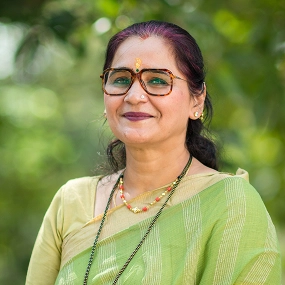
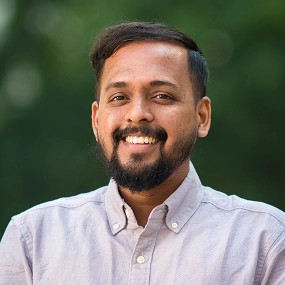
FACULTY OF SOCIAL SCIENCE Department of Economics Established in 1962 Overview The Department of Economics at Parvatibai Chowgule College offers an undergraduate programme in Economics in accordance with the National Education Policy (NEP). The programme is designed to provide a strong foundation in economic theory, quantitative methods, and applied economics, while promoting critical thinking, analytical skills, and multidisciplinary perspectives. At the undergraduate level, the Department offers a structured curriculum comprising core courses and a wide range of electives, enabling students to develop both conceptual clarity and practical competence in economics. The curriculum emphasises contemporary economic issues, policy analysis, and real-world applications, in alignment with the objectives of holistic and flexible learning envisioned under the NEP. The teaching and learning methodologies adopted by the Department include interactive lectures and discussions, workshops, seminars, research paper reviews, case studies, problem-based learning, field visits, research projects, and dissertations. Students are also encouraged to participate in national and international seminars and academic events, thereby fostering a research-oriented and engaged educational environment. The Department makes extensive use of technology in teaching and learning. Course materials are provided to students through the institutional learning management system. In addition, students are trained to access and utilise online data sources and research platforms, including the Central Statistical Organisation (CSO), Reserve Bank of India (RBI), World Bank, International Monetary Fund (IMF), International Trade Centre (ITC), and other relevant databases. Resources available through INFLIBNET, along with the College library, further support teaching, learning, and research activities. Read More Read Less Vision The mission of the Department of Economics is to provide its students with a strong theoretical and analytical foundation in economics and to develop their employability and research skills, with a focus on applied areas of economics. Mission Professionally competent, ethically upright, and socially concerned students are fostered through innovative teaching, learning, and evaluation initiatives. Programmes Offered Bachelor of Arts (B.A) in Economics UNDERGRADUATE PROGRAM | 3 YEARS Bachelor of Arts (B.A) in Economics The BA Economics Programme… Read More No posts found Department Faculty Dr. Rupali M Tamuly Associate Professor Ramu P Pagi Assistant Professor Renuka Prakash Sagvekar Associate Professor Sharanya Ravindranath Associate Professor No posts found Activities Organised ? ECO VISION: An inter-school higher secondary competition for Higher Secondary students across Goa, featuring quizzes, debates, and interactive sessions that introduce economics, careers, and contemporary ideas. ?️ ECO FEUD: An inter-class debate competition that sharpens critical thinking, analytical reasoning, and effective communication on economic issues. ? ECOSPHERE: An interactive inter-class quiz competition that enhances conceptual understanding, current affairs awareness, and academic engagement. ? REVELATIONS / ECO VERSE: A state-level intercollegiate mega event with multiple creative and academic sub-events promoting economic awareness, innovation, and sustainability. ? ECO DAY: A hands-on learning event that connects classroom concepts with real-world economic applications through interactive activities. ?️ BAZAAR DAY: A practical entrepreneurial experience where students design, price, market, and sell products, gaining real business and life skills. ? BUSINESS PLAN COMPETITION: A platform for students to present innovative business ideas before entrepreneurs and receive real-world feedback. No posts found Teaching & Learning method The Department of Economics adopts a student-centric and inclusive approach to teaching and learning, recognising the diverse academic backgrounds and learning abilities of students. At the beginning of each semester, a competency assessment is conducted to understand students’ preparedness in the subject. Based on the outcomes, academic support is provided to students who require additional guidance through mentoring, counselling, and e-resources. Student progress is continuously monitored to ensure effective learning outcomes. Classroom teaching is highly interactive and discussion-oriented. Along with lectures, the Department regularly incorporates innovative methods such as quizzes, games, problem-solving activities, outdoor experiments, and student-led seminars to make learning engaging and meaningful. Students are encouraged to explore contemporary themes in economics, sustainability, and empirical analysis through presentations and discussions. To promote holistic development, the Department offers value-added and skill-oriented learning opportunities through workshops, certificate programmes, and training sessions. These initiatives focus on developing analytical, quantitative, and research skills, including exposure to econometric tools and applied economic analysis. The Department also collaborates with national and international institutions to provide students with global academic exposure. Students benefit from regular interactions with experts from academia, research institutions, government bodies, industry, and entrepreneurship organisations. Guest lectures and expert talks help bridge the gap between classroom learning and real-world applications of economics. Alumni interactions further inspire students by offering academic guidance and career insights. Evaluation is continuous and comprehensive, in line with the principles of the National Education Policy. Students are assessed through a variety of methods, including assignments, quizzes, presentations, case studies, article and book reviews, response papers, and practical exercises. These assessment tools are designed to evaluate not only subject knowledge but also critical thinking, communication skills, creativity, and problem-solving abilities. Experiential learning is an integral part of the curriculum. Field visits to industries, self-help groups, and environmentally sustainable initiatives enable students to apply economic concepts to real-life situations. Skill-building activities such as entrepreneurship exercises, business plan preparation, and campus-based marketing activities provide hands-on exposure to business decision-making, teamwork, and leadership. The semester-end examination includes integrative and application-based questions that encourage students to connect concepts across different areas of economics. Overall, the Department’s teaching–learning–evaluation framework aims to nurture analytical thinking, practical skills, ethical awareness, and a lifelong learning approach, preparing students for higher studies, research, and diverse career paths. Best Practices We integrate software-driven learning and real-world applications across the curriculum. Students work hands-on with R, Python, STATA, GRETL, Excel, and Tally, apply concepts through business plans, data projects, and fieldwork, and learn from experts and alumni—building strong analytical, research, and employability skills in line with NEP. Tech-Integrated Learning: R • Python • STATA • GRETL • Excel • Tally Hands-on analytics in core courses Applied Projects: Live datasets • Case studies • Fieldwork Theory to practice Entrepreneurship: Business plans • Bazaar Day • Market simulations Decision-making & leadership Certifications: Econometrics • Advanced empirical tools Career-ready skills Industry & Alumni: Expert talks • Mentoring • Career guidance Real-world insights
Bachelor of Arts (B.A) in Economics

UNDERGRADUATE PROGRAM | 3 YEARS Bachelor of Arts (B.A) in Economics The BA Economics Programme at Parvatibai Chowgule College offers a comprehensive and dynamic curriculum designed to equip students with a solid foundation in economic theory, quantitative methods, policy analysis, and real-world problem-solving. View Syllabus Overview The BA Economics Programme at Parvatibai Chowgule College offers a comprehensive and dynamic curriculum designed to equip students with a solid foundation in economic theory, quantitative methods, policy analysis, and real-world problem-solving. Grounded in the principles of the National Education Policy (NEP) 2020, the programme emphasises multidisciplinary learning, analytical rigour, and practical application. This three-year undergraduate programme blends theoretical insights with hands-on learning. Students explore core areas, including microeconomics, macroeconomics, development economics, public finance, international economics, and econometrics. Alongside this foundation, the curriculum integrates data analytics, software tools, and applied skills to prepare students for a diverse range of careers and advanced studies. Program Specific Outcomes (PSO) PSO-1: Competence of Economic Knowledge To achieve a comprehensive understanding of economic theories, principles, and methodologies. PSO-2: Practical Application of Economic Skills To achieve a comprehensive understanding of economic theories, principles, and methodologies. PSO-3: Promoting Social Responsibility To foster a strong sense of social responsibility in addressing economic challenges and promoting the welfare of society. PSO-4: Collaboration and Innovation for Economic Development To collaborate with stakeholders from various sectors to develop innovative solutions to economic problems, fostering sustainable economic development and societal progress. To achieve a comprehensive understanding of economic theories, principles, and methodologies.To achieve a comprehensive understanding of economic theories, principles, and methodologies.To foster a strong sense of social responsibility in addressing economic challenges and promoting the welfare of society.To collaborate with stakeholders from various sectors to develop innovative solutions to economic problems, fostering sustainable economic development and societal progress. Course Structure Internship of 4 credits should be completed in Semester IV and V. Sem I Sem II Sem III Sem IV Sem V Sem VI Major Core Minor/ Vocational Multidisciplinary Course (MDC) Value Added Course (VAC) Skill Enhancement Course (SEC) UG-ECO-101: Microeconomi cs-I UG ECO-102: Principles of Economics UG-ECO-MDC1: Financial Investment for all UG-ECO-MDC2: Natural Resource Economics UG-ECO-VAC1: Kautilya’s Arthshastra UG-ECO-VAC2: Financial Literacy UG-ECO-SEC1: Accounting for Non-accountants Major Core Minor/ Vocational Multidisciplinary Course (MDC) Value Added Course (VAC) Skill Enhancement Course (SEC) UG-ECO-302: Statistical Methods inEconomics UG-ECO-104: Economics of Infrastructure UG-ECO-105: Home Economics UG-ECO-MDC3: Taxation for all UG-ECO-MDC 6: Options Trading: Theory and Practice (MDC) UG-ECO-VAC3: Gandhian Economic Thought UG-ECO-SEC2: Entrepreneurs hip Development UG-ECO-SEC3: Project Management and Evaluation Major Core Minor/ Vocational Multidisciplinary Course (MDC) Value Added Course (VAC) Skill Enhancement Course (SEC) UG-ECO-201: Macro Economics-I UG-ECO-202: Empirical Techniques for Economic Analysis–I UG-ECO-203: Economics of Social Sector UG-ECO-MDC4: Human Resource Management UG-ECO-MDC5: Transport Economics UG-ECO-SEC4: Actuarial Economics UG-ECO-SEC6: Data Management and Presentation using Excel Major Core Minor/ Vocational UG-ECO-205: Behavioural Economics UG-ECO-206: Evolution of Economic Thought UG-ECO-301: Research Methodology in Economics UG-ECO-208: Health Economics UG-ECO-209: Introduction to Mathematical Techniques for Economic Analysis UG-ECO-210: Game Theory and Applications Major Core Minor/ Vocational UG-ECO-207: Public Economics UG-ECO-103: Economics of Growth and Development UG-ECO-303: Introduction to Econometrics UG-ECO-304: Introduction to Operations Research for Economists Major Core Minor/ Vocational UG-ECO-305: Environmental Economics UG-ECO-306: Financial Economics-I UG-ECO-307: International Trade Theory and Policy UG-ECO-PRJ: Project UG-ECO-308: Data Science in Economics   Major Core Minor/ Vocational Multidisciplinary Course (MDC) Value Added Course (VAC) Skill Enhancement Course (SEC) UG-ECO-101: Microeconomi cs-I UG ECO-102: Principles of Economics UG-ECO-MDC1: Financial Investment for all UG-ECO-MDC2: Natural Resource Economics UG-ECO-VAC1: Kautilya’s Arthshastra UG-ECO-VAC2: Financial Literacy UG-ECO-SEC1: Accounting for Non-accountants Major Core Minor/ Vocational Multidisciplinary Course (MDC) Value Added Course (VAC) Skill Enhancement Course (SEC) UG-ECO-302: Statistical Methods inEconomics UG-ECO-104: Economics of Infrastructure UG-ECO-105: Home Economics UG-ECO-MDC3: Taxation for all UG-ECO-MDC 6: Options Trading: Theory and Practice (MDC) UG-ECO-VAC3: Gandhian Economic Thought UG-ECO-SEC2: Entrepreneurs hip Development UG-ECO-SEC3: Project Management and Evaluation Major Core Minor/ Vocational Multidisciplinary Course (MDC) Value Added Course (VAC) Skill Enhancement Course (SEC) UG-ECO-201: Macro Economics-I UG-ECO-202: Empirical Techniques for Economic Analysis–I UG-ECO-203: Economics of Social Sector UG-ECO-MDC4: Human Resource Management UG-ECO-MDC5: Transport Economics UG-ECO-SEC4: Actuarial Economics UG-ECO-SEC6: Data Management and Presentation using Excel Major Core Minor/ Vocational UG-ECO-205: Behavioural Economics UG-ECO-206: Evolution of Economic Thought UG-ECO-301: Research Methodology in Economics UG-ECO-208: Health Economics UG-ECO-209: Introduction to Mathematical Techniques for Economic Analysis UG-ECO-210: Game Theory and Applications Major Core Minor/ Vocational UG-ECO-207: Public Economics UG-ECO-103: Economics of Growth and Development UG-ECO-303: Introduction to Econometrics UG-ECO-304: Introduction to Operations Research for Economists Major Core Minor/ Vocational UG-ECO-305: Environmental Economics UG-ECO-306: Financial Economics-I UG-ECO-307: International Trade Theory and Policy UG-ECO-PRJ: Project UG-ECO-308: Data Science in Economics   Faculty of Life Science Department of Economics The Department of Economics, Parvatibai Chowgule College of Arts and Science(Autonomous), began in 1962 as one of the first and oldest running department. Read More FAQ’s What type of institution is Chowgule College? The Department of English, Parvatibai Chowgule College of Arts and Science(Autonomous), began in 1962 as one of the first and oldest running department. What type of institution is Chowgule College? The Department of English, Parvatibai Chowgule College of Arts and Science(Autonomous), began in 1962 as one of the first and oldest running department. What type of institution is Chowgule College? The Department of English, Parvatibai Chowgule College of Arts and Science(Autonomous), began in 1962 as one of the first and oldest running department. What type of institution is Chowgule College? The Department of English, Parvatibai Chowgule College of Arts and Science(Autonomous), began in 1962 as one of the first and oldest running department. What type of institution is Chowgule College? The Department of English, Parvatibai Chowgule College of Arts and Science(Autonomous), began in 1962 as one of the first and oldest running department. The Department of English, Parvatibai Chowgule College of Arts and Science(Autonomous), began in 1962 as one of the first and oldest running department. The Department of English, Parvatibai Chowgule College of Arts and Science(Autonomous), began in 1962 as one of the first and oldest running department. The Department of English, Parvatibai Chowgule College of Arts and

Scroll to Top